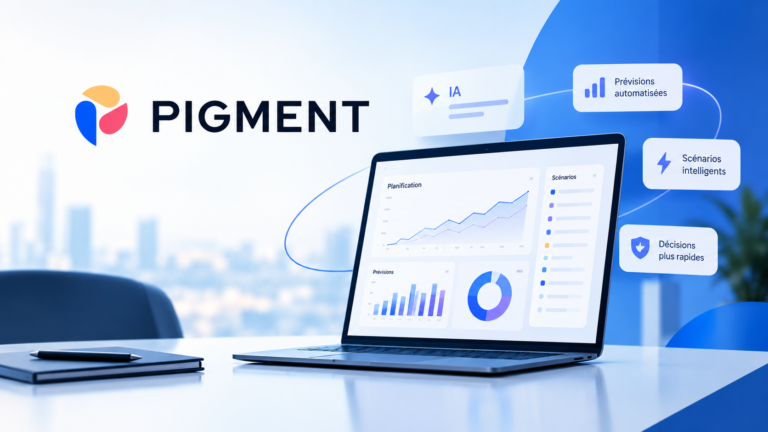
Planning models must now keep pace with businesses whose structures, activities and priorities change regularly. To address this reality, Pigment highlights the capabilities of Dynamic Modeling integrated into its Graphite engine. The vendor presents this technology as a way to evolve planning models while facilitating analysis and simulations.
Models that can keep pace with change
With Dynamic Modeling, teams can modify the structure of their models as the organization or business requirements evolve. Relationships between different data points can therefore be adapted without starting from scratch.
This approach applies in particular to financial planning, forecasting and analysis activities. An organizational change, a new analysis dimension or a change in assumptions can be integrated directly into existing models.
Pigment also emphasizes the ability to explore data at different levels of granularity. Users can build views suited to their needs and modify the dimensions used to analyze a situation.
Scenarios integrated into models
The platform also enables users to create and compare scenarios directly within the planning environment. Teams can therefore test different assumptions and observe their impact on the models.
This capability is part of a more continuous planning approach. Rather than locking models for a budget cycle or forecasting period, users can evolve them as new information becomes available.
Graphite at the heart of this evolution
These features rely on Graphite, Pigment’s technology engine. The vendor states that it designed this architecture to manage large volumes of data while enabling multiple users and artificial intelligence agents to work simultaneously.
Graphite also relies on a governed data layer designed to bring together information from ERP, CRM and HR systems in particular. Data, metrics and dimensions can therefore be used across different models with a common repository.
Finally, the engine provides the technological foundation for Pigment’s AI features. Agents can leverage the business context available on the platform to perform analyses or work on models, with access control and governance mechanisms.
source: Pigment