Faced with volatility that has become structural and increasing requirements for financial performance management, finance departments are being called upon to rethink their planning approaches. It is in this context that Board International unveils Board 15, a major evolution of its enterprise planning platform.
This new version is part of an underlying trend: the shift from periodic, often fragmented planning to continuous, integrated planning enhanced by artificial intelligence.
Addressing the limitations of traditional models
Despite the investments made in EPM tools in recent years, a large majority of organisations continue to rely heavily on spreadsheets for their planning processes. This dependency is often accompanied by well-identified limitations: slow cycles, lack of alignment between teams, and difficulty in ensuring reliable forecasts.
With Board 15, the vendor aims to address these challenges by offering a unified platform capable of bringing finance, operations and business functions together around a shared view of data.
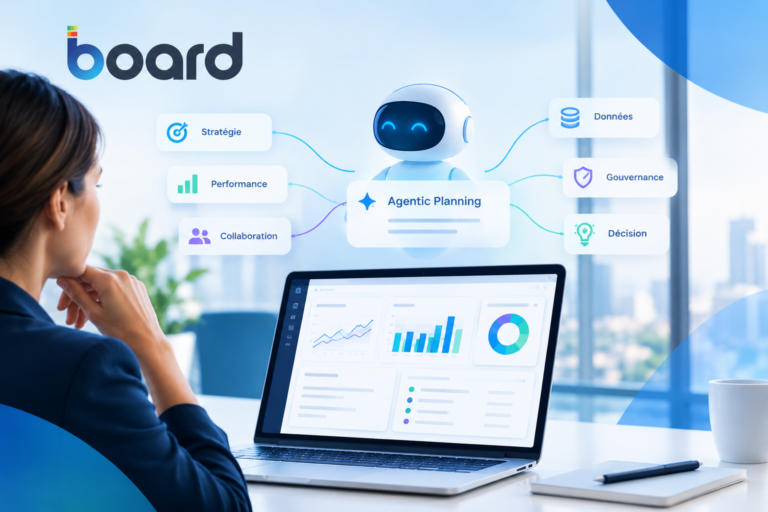
Agentic AI at the heart of the platform
One of the key developments introduced by Board 15 is the integration of Board Agents, artificial intelligence agents specialised by business function.
Unlike generic approaches, these agents are directly integrated into existing planning models. They operate within the company’s data structures, business rules and hierarchies.
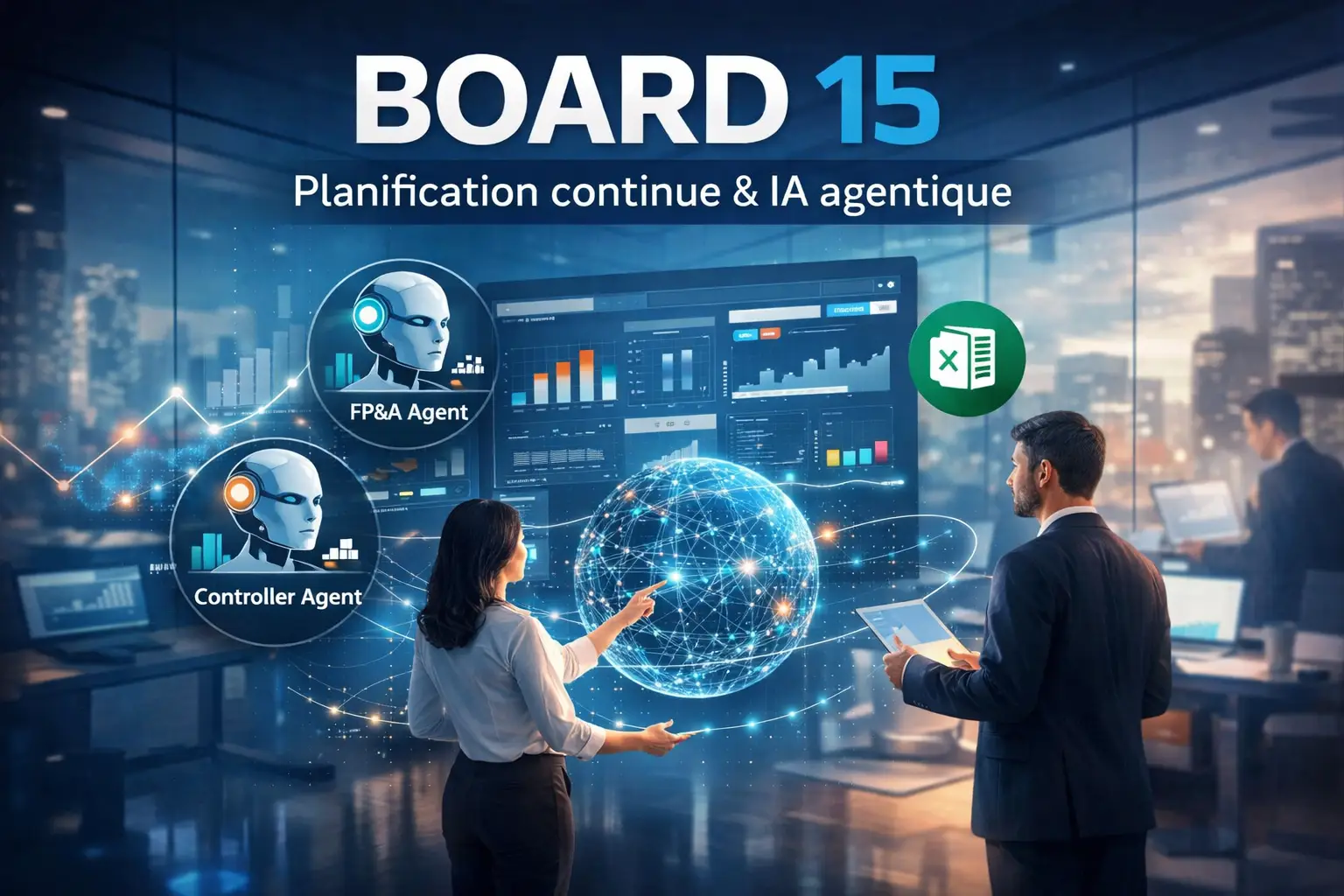
Initially, two agents are offered for the finance function:
- an agent dedicated to FP&A, capable of automating tasks such as financial modelling, variance analysis, and revenue and margin forecasting;
- an agent focused on financial control, supporting closing, consolidation and reporting processes.
According to the vendor, the objective is not only to increase productivity, but also to enable teams to focus more on analysis and decision-making.
Truly continuous planning
Beyond artificial intelligence, Board 15 focuses on the concept of continuous planning. The platform now includes advanced forecasting capabilities, combining econometric and operational approaches within the same environment.
This unification makes it possible to link demand forecasts directly to financial impacts, without disconnects between the different planning levels. Teams can therefore work from consistent, shared and continuously updated data.
In this model, forecasting is no longer an isolated step, but becomes a central component of overall business management.
A deliberate integration with Excel
Aware of the central role that Microsoft Excel still plays in planning processes, the vendor has chosen integration rather than replacement.
With Board 15, a dedicated Microsoft 365 add-in enables users to access platform data directly from Excel, while maintaining a centralised governance framework.
This approach aims to reconcile flexibility for users with data control for IT departments, while avoiding the multiplication of versions and sources of truth.
A redesigned user experience
Version 15 also introduces significant interface enhancements, notably through improvements to Flex Grid, the platform’s central planning workspace.
New features include:
- greater flexibility in manipulating dimensions and indicators;
- the integration of visualisations directly into grids;
- usability enhancements designed to facilitate user adoption.
These developments reflect a desire to improve team productivity while reducing the friction associated with using tools.
Measurable impacts for organisations
The integrated approach offered by Board 15 also aims to deliver tangible results in operational and financial performance.
By aligning forecasts, operational plans and financial targets in the same environment, organisations can reduce inconsistencies, improve inventory management and enhance decision quality.
In certain use cases, greater control over forecasting could free up significant levels of working capital and sustainably improve profitability.
A gradual evolution of planning models
With Board 15, Board International is not proposing a radical break, but rather an evolution path. The platform enables organisations to progress gradually, from approaches still largely based on Excel to fully integrated continuous planning models enriched by AI.
In this context, agentic AI appears less as an end in itself than as a lever for fundamentally transforming performance management practices.
source: Board