Generative artificial intelligence is beginning to transform the way companies design their management tools. With Pigment Frames, the publisher aims to go further by enabling users to create planning, reporting and analysis interfaces directly within its environment, while maintaining the connection to the company’s data and processes.
From generating interfaces to integrating them into processes
Generative AI tools can now quickly produce dashboards, presentations and customised interfaces. However, their use in a professional context can quickly raise governance questions. A generated interface may be visually polished without being connected to real-time data, business rules or the company’s approval processes.
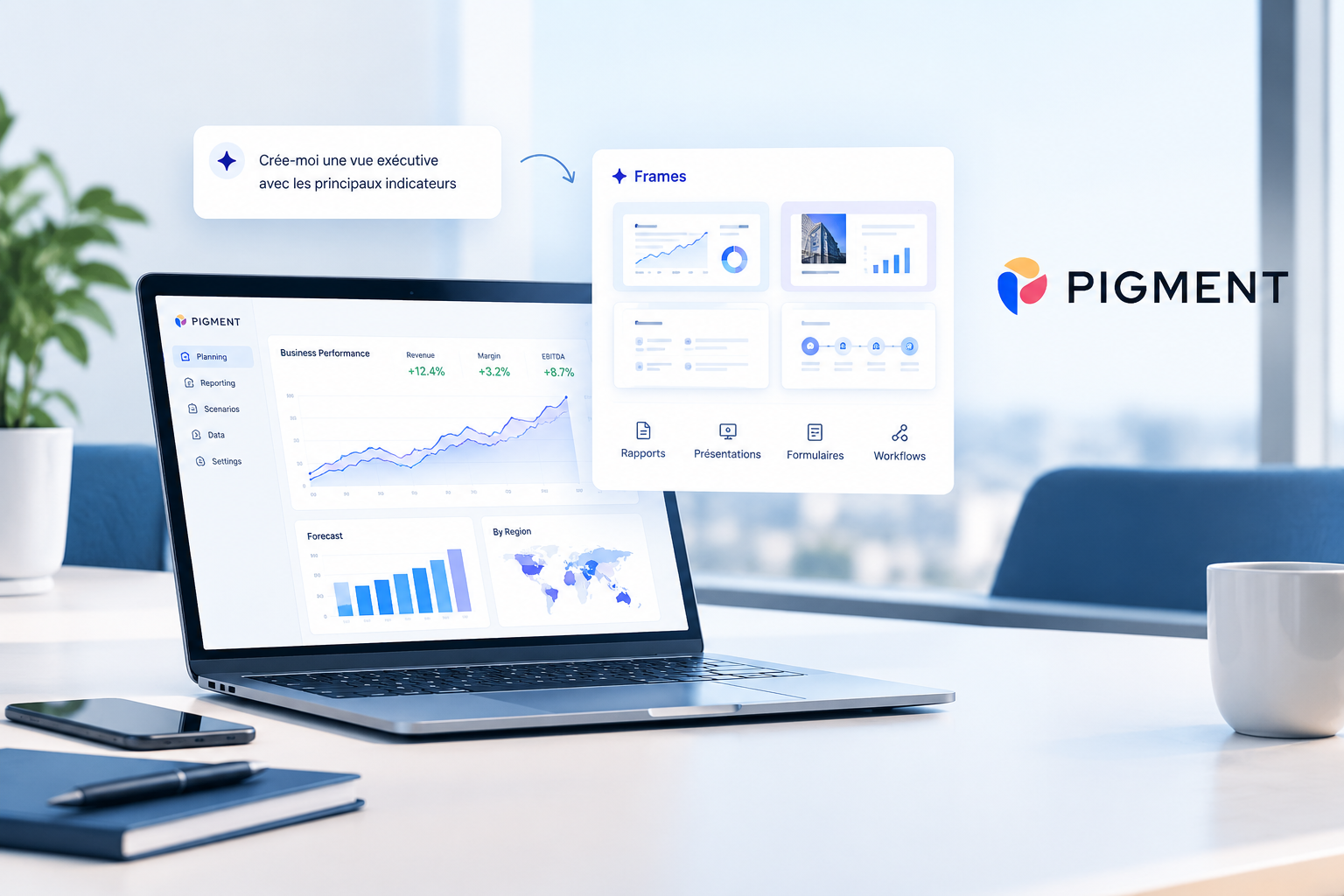
This is precisely where Pigment positions Frames. The feature is designed to integrate this creation capability directly into the Pigment workspace, with access to existing data, planning models and workflows.
The aim is therefore to bring the creativity and speed of generative AI closer to the usual requirements of financial and operational management environments: access control, up-to-date data, traceability and consistency with business processes.
Interfaces created from a simple request
With Frames, users can describe in natural language the experience they want to build using Pigment’s Modeler Agent. The approach is intended to reduce reliance on technical or design skills when creating new work experiences.
The capabilities presented by the publisher notably include the creation of advanced reports, interactive visualisations, presentations for executive committees, as well as forms and approval workflows.
Pigment also indicates that these experiences can be designed from other AI environments such as Claude, ChatGPT or Cursor, thanks to its MCP Server. The aim is to give users greater freedom in how they design their interfaces, while connecting them to the company’s planning environment.
The challenge: maintaining data governance
For finance departments and teams involved in planning, the value of this approach therefore lies not solely in generating visual content.
A management interface must be able to rely on the same data as the planning models, comply with the access rights defined by the organisation and fit into existing processes. It is this continuity between the interface, data and workflows that Pigment highlights with Frames.
The feature thus illustrates a broader evolution in the EPM market: AI is no longer used only to analyse or generate information. It is also beginning to influence how users build and use their management environments.
Towards more personalised planning experiences
With Frames, Pigment ultimately aims to make planning tools more adaptable to users’ needs. Rather than offering only standardised screens, the approach enables teams to create experiences tailored to their use cases, whether for reporting, simulation, a presentation for an executive committee or an approval process.
This development could help bring EPM tools even closer to the day-to-day work of finance and operations teams. It also raises an important question for companies: how can they benefit from the flexibility of generative AI while retaining control over data, business rules and governance?
With Pigment Frames, the publisher provides an answer by integrating this new generation of interfaces directly into its planning environment.
source: Pigment